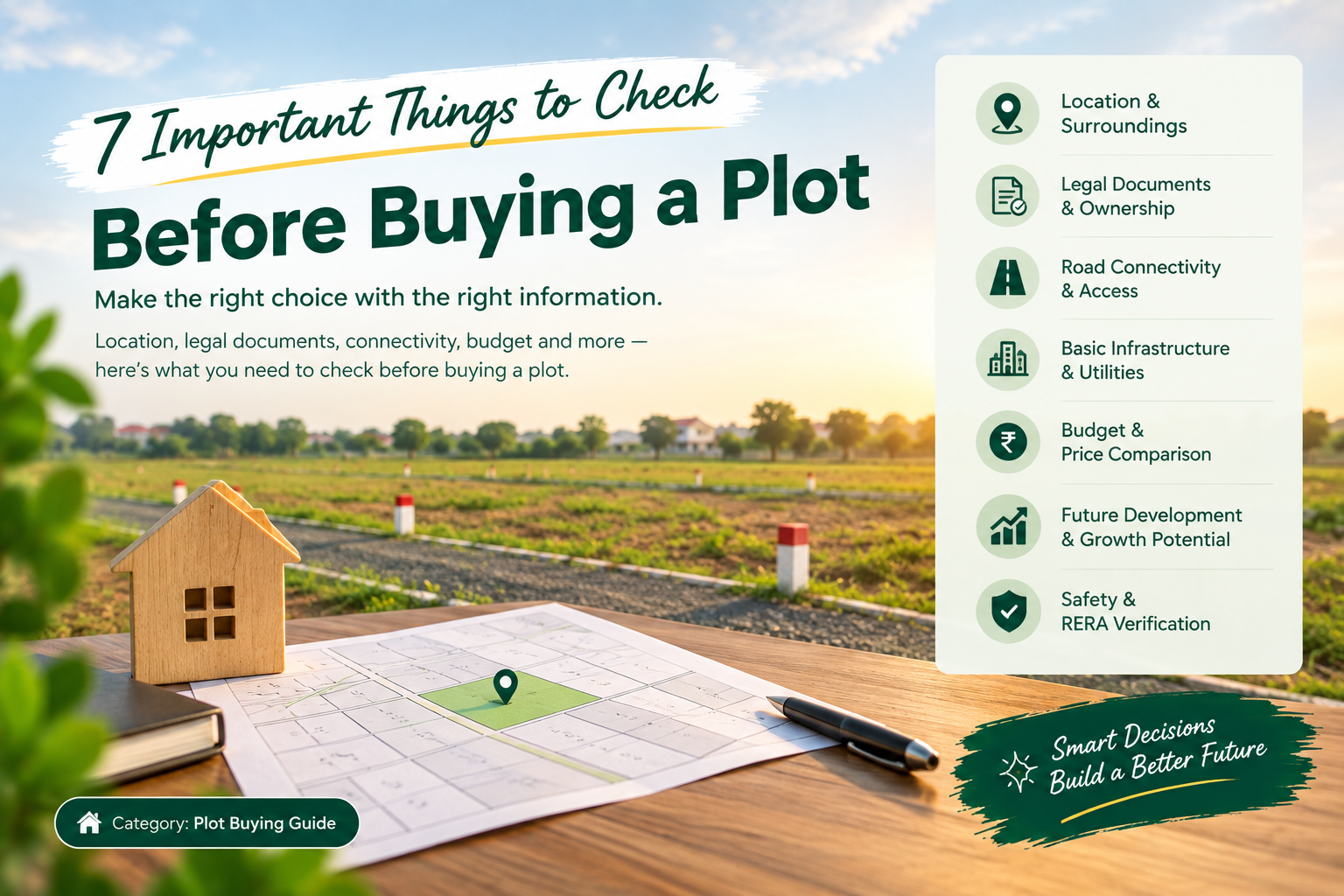
7 Important Things to Check Before Buying a Plot
Buying a plot can be an important step toward building your dream home or making a long-term investment. However, choosing the right plot is about much more than simply finding a piece of land at an attractive price.
Before you make a decision, it is important to carefully evaluate the location, documents, connectivity, infrastructure, price and future potential of the property. A little research today can help you avoid unnecessary problems in the future.
If you are planning to buy a plot, here are 7 important things you should check before making your decision.
1. Check the Location and Surroundings
Location is one of the most important factors when buying a plot.
A good location can make a property more convenient for living and may also influence its future value. Before buying, visit the area personally and check what is available nearby.
Consider factors such as:
Distance from main roads and highways
Nearby schools and colleges
Hospitals and healthcare facilities
Markets and shopping areas
Public transportation
Banks and other essential services
Residential development in the surrounding area
Also observe the neighbourhood. Is the area developing? Are there other residential projects nearby? Is the locality easily accessible?
Remember, a plot that looks affordable but is difficult to access may not always be the best choice.
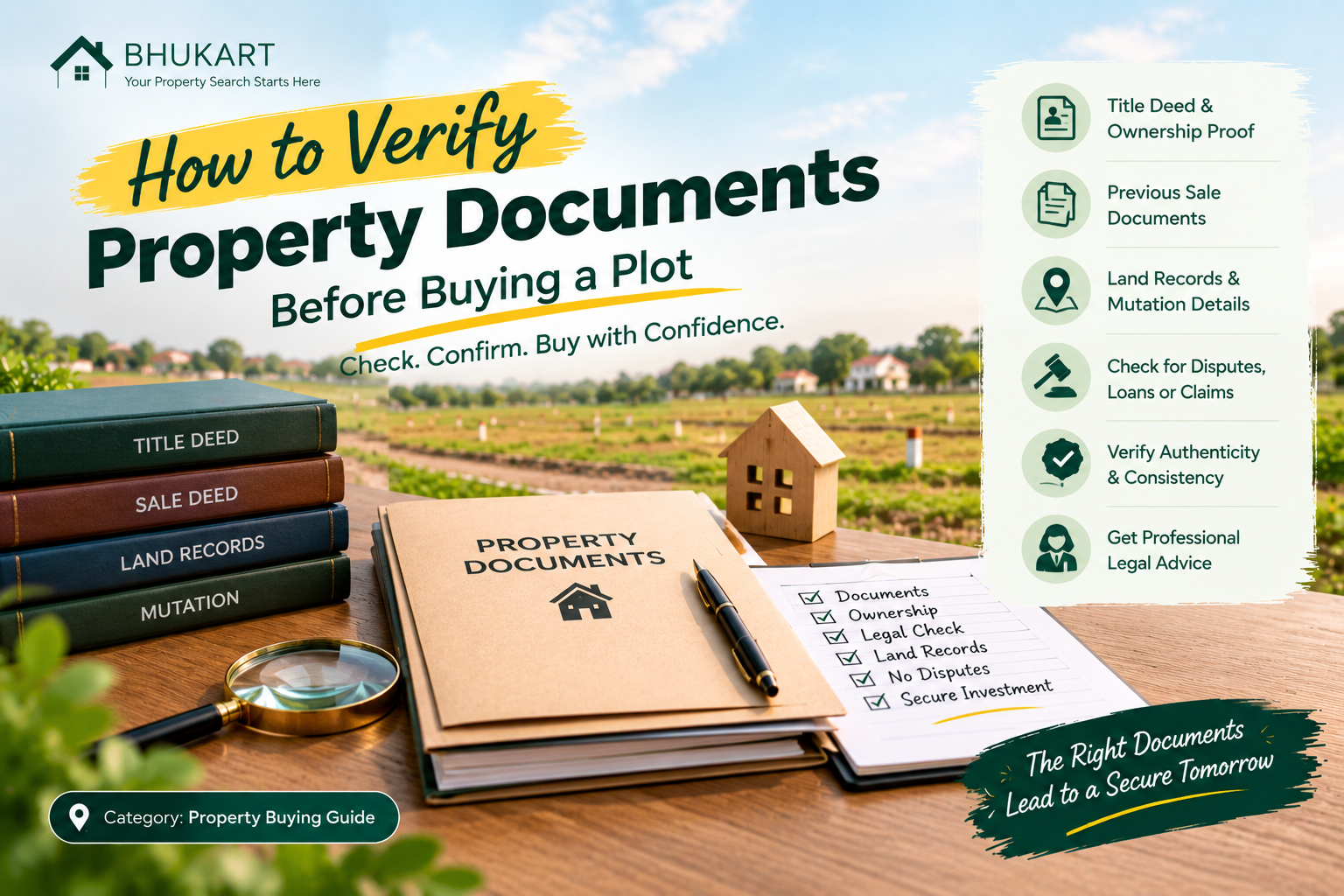
2. Verify Ownership and Legal Documents
One of the most important steps before buying a plot is checking the property's ownership and legal documents.
You should make sure that the person selling the property has the legal right to sell it. Important documents may include the title deed, previous sale documents, mutation records and other relevant land records, depending on the property and location.
You should also check whether there are any existing disputes, loans, claims or other legal issues associated with the property.
Because property laws and documentation requirements can vary by state and type of land, it is advisable to have the documents reviewed by a qualified property lawyer or other appropriate professional before making a major financial commitment.
Never rely only on verbal promises. Check the paperwork.
3. Check Road Connectivity and Access
A plot may look perfect on paper, but proper access to the property is equally important.
Check whether the plot has a proper approach road and whether the road shown in the documents matches the actual access available at the site.
Ask yourself:
Is the road wide enough for regular vehicles?
Is the property connected to a public road?
Is the access available throughout the year?
Are there any access restrictions?
Is the surrounding road network improving?
Good connectivity can make a plot more practical for construction, residence and future resale.
4. Check Infrastructure and Basic Utilities
Before purchasing a plot, find out what basic infrastructure is available in the area.
Check the availability and accessibility of:
Electricity
Water supply
Drainage and sewage
Street lighting
Internet and mobile connectivity
Nearby public facilitiesI
f you are planning to construct a house, also consider whether construction-related services and materials are easily available in the area.
Infrastructure can have a significant impact on the convenience and usability of a property.
6. Consider Future Development and Growth Potential
When buying a plot, don't look only at what the area looks like today. Try to understand what it could look like in the future.
Check whether there are upcoming roads, residential developments, commercial areas or other infrastructure projects around the locality.
However, avoid making a purchase based purely on rumours or unverified promises about future development.
Look for reliable information and consider the overall development pattern of the area.
A location with improving connectivity and growing infrastructure may have stronger long-term appeal, although property values can never be guaranteed.
7. Check Approvals, Land Use and Applicable Regulations
Before buying a plot, it is important to understand how the land can legally be used.
Check the applicable land-use classification, layout approval and permissions required for construction. Depending on the location, there may be rules regarding residential, commercial, agricultural or other types of land use.
If the plot is part of a development or plotted project, check the relevant approvals and registration requirements applicable to that project.
You should also confirm whether the plot dimensions and boundaries on the documents match the actual property on the ground.
Professional verification can be especially useful before you pay a significant amount or sign a final agreement.
A Simple Plot-Buying Checklist
Before making your final decision, ask yourself:
☐ Have I personally visited the property?
☐ the location suitable for my purpose?
☐ Have I verified the ownership documents?
☐ Is there proper road access?
☐ Are basic utilities available or planned?
☐ Have I compared prices with similar plots?
☐ Have I checked the land use and applicable approvals?☐ Have I considered the area's future development?
☐ Have I taken professional advice where necessary?
If you can confidently answer these questions, you are in a much better position to evaluate the property.
Final Thoughts
Buying a plot is a significant decision, whether you are purchasing land to build your future home or considering it as a long-term investment.
The right property is not necessarily the cheapest one. It is the one that fits your purpose, budget and requirements while also standing up to proper location, documentation and due-diligence checks.
Take your time, visit the property, compare your options and verify the important details before making a commitment.
At BHUKART, our aim is to make the property search process simple, transparent and convenient by helping you discover properties and opportunities worth exploring.
Because finding the right property should begin with the right information.
Explore. Compare. Decide better with BHUKART.
Disclaimer
This article is intended for general informational purposes only. Property documentation, approvals, land-use rules and legal requirements can vary depending on the location and type of property. Always verify the relevant records and seek professional legal or financial advice before making a property purchase.
Related Post

Welcome to Bhukart: Your Property Search Starts Here
Spread the loveWelcome to BHUKART! Your Property Search Starts Here. Finding the right property [...]
10 Questions to Ask Before Buying a Plot
Spread the loveBuying a plot is a major property decision. Whether you are planning to [...]