How to Verify Property Documents Before Buying a Plot
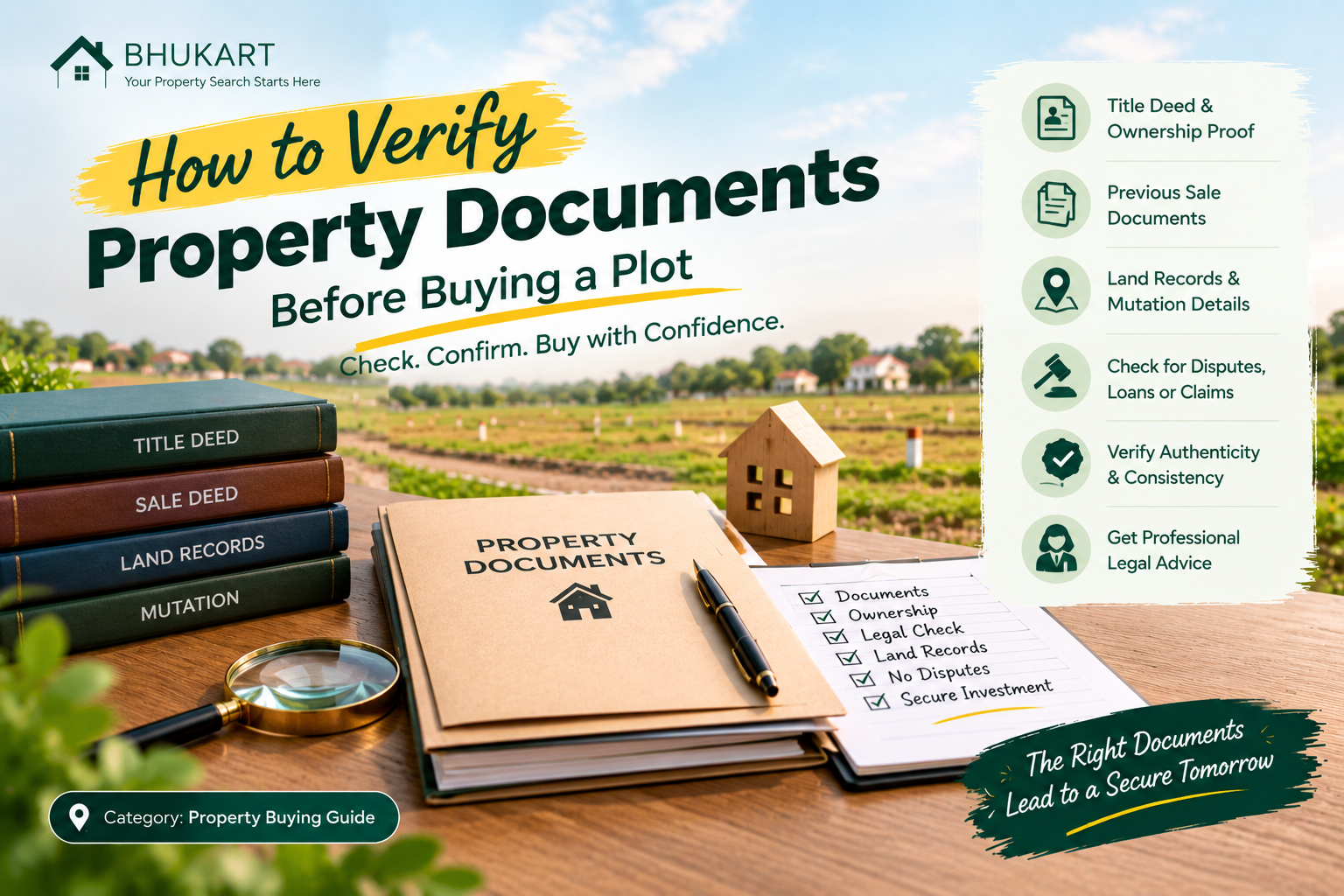
Buying a plot is a significant financial decision. The location may look perfect, the price may seem attractive, and the seller may appear trustworthy—but before you move forward, there is one step you should never overlook: verifying the property documents.
Property documents help establish important details such as who owns the property, how the property was transferred in the past, whether there are any recorded claims or issues, and whether the proposed use of the land is permitted.
However, simply looking at a few documents is not enough. The important part is to verify the information across relevant records and make sure the documents are consistent with the actual property.
Here is a practical guide to help you understand how to verify property documents before buying a plot.
1. Start With the Title and Ownership
The first question you should answer is:
Who legally owns this plot?
Ask the seller to provide the document establishing their title or ownership and carefully check the details.
Look for:
Name of the owner
Property description
Plot or survey number, where applicable
Area of the property
Location
Boundaries
Details of how the seller acquired the property
If there is more than one owner, make sure the ownership structure is clearly understood and that the necessary parties are involved in the transaction.
Why this matters:
A person offering to sell a property is not automatically proof that they have the legal authority to sell it.
2. Check the Previous Sale and Ownership History
Don't look only at the seller's current document.
Try to understand the property's ownership history and how it reached the current owner.
Depending on the property, this may involve checking previous sale deeds, transfer documents, inheritance-related documents, partition documents or other relevant records.
The objective is to establish a reasonably clear chain of title.
Ask:
Who owned the property before the current seller?
How was ownership transferred?
Do the previous documents match the current property details?
Any unexplained gap or inconsistency deserves further investigation.
3. Verify Land and Revenue Records
Depending on the state and type of property, different land and revenue records may be relevant.
These records can contain information relating to the land, recorded ownership or possession, mutation and other details.
The terminology and availability of records can vary from one state to another, so don't assume that the same document name or process applies everywhere.
The important thing is to check the official records applicable to that property and location.
Also remember that a mutation entry or revenue record should not automatically be treated as conclusive proof of title in every situation. Title verification may require examination of the underlying documents as well.
4. Check Mutation and Transfer Entries
Mutation generally refers to updating relevant land or revenue records after a transfer, inheritance or other change.
If the property has changed hands, check whether the relevant records have been appropriately updated.
However, mutation is primarily a record-maintenance process and does not by itself establish perfect ownership in every case.
That is why it should be considered along with the title documents and other relevant records, rather than as a substitute for them.
5. Check for Loans, Claims and Encumbrances
One of the most important questions before buying a plot is:
Is there any existing financial or legal claim over the property?
Depending on the property and jurisdiction, an encumbrance-related search or certificate may help identify certain registered transactions, charges or encumbrances.
You should investigate whether the property is subject to:
A registered mortgage or loan
Legal claims
Attachments
Charges
Other registered encumbrances
The exact scope of an encumbrance search depends on the applicable records and jurisdiction.
If the seller says that a previous loan has already been cleared, ask for appropriate evidence of closure/release and verify the relevant records.
6. Check for Court Cases and Property Disputes
Before buying a plot, make sure there are no ongoing court cases, ownership disputes, family disputes, or legal claims related to the property.
Ask the seller directly whether the property is involved in any legal dispute. Also check the relevant property and revenue records for any signs of pending cases, claims, or restrictions.
Common issues may include:
Family or inheritance disputes
Multiple ownership claims
Boundary disputes
Pending court cases
Disputes over access roads or right of way
Government acquisition or other legal claims
If the seller says that a previous dispute has been resolved, ask for proper documents or court orders as proof.
Tip: If you are unsure about the property's legal status, get the documents checked by a qualified property lawyer before making any major payment or signing an agreement.
7. Verify the Plot's Boundaries and Measurements
Documents should not be checked in isolation from the actual land.
Visit the plot and compare the physical property with the available documents, site plan and other relevant records.
Check:
Plot number
Dimensions
Total area
Four boundaries
Position on the layout
Road-facing side
Access route
If possible, have the property measured by an appropriately qualified surveyor when there is any doubt about dimensions or boundaries.
A difference between the paperwork and the physical property should be investigated before proceeding.
8. Check Land Use and Applicable Approvals
Before buying a plot, understand what the land can legally be used for.
If your intention is to build a house, don't assume that every plot can automatically be used for residential construction.
Check the applicable:
Land-use classification
Layout approvals
Development permissions
Building-related requirements
Local authority rules
Other permissions or restrictions applicable to the property
The requirements can differ depending on the location and nature of the land.
If the property is part of a plotted development, also verify the approvals and registrations applicable to that development.
9. Don't Forget the Access Road
Road access is often overlooked during document verification.
Check whether the plot has a legally recognised and practically usable access route.
Compare the actual road with the relevant site plan or property documents.
Ask:
Is the access road part of the property, a public road, or based on a right of way/easement?
If access depends on a right of way, understand the relevant legal documentation and conditions.
A plot that looks attractive but has uncertain access can create serious practical problems later.
10. Make Sure All Documents Tell the Same Story
This is one of the most important parts of document verification.
Don't check each document separately. Compare them with one another.
For example, check whether the following details remain consistent:
Owner's Name → Plot Number → Area → Location → Boundaries → Previous Transfer → Current Records
If one document says one plot number and another shows something different, don't ignore it.
Similarly, differences in spelling, area, boundaries or ownership details should be clarified before you proceed.
Sometimes differences may have a legitimate explanation. But they should be properly understood and documented—not simply assumed to be harmless.
Common Red Flags You Should Never Ignore
Be particularly careful if you encounter:
🚩Seller refuses to show original or relevant documents
🚩Ownership details are unclear
🚩Property details don't match across documents
🚩Seller is unwilling to allow proper verification
🚩There is an unexplained gap in the ownership history
🚩The plot boundaries differ from the documents
🚩Road access is unclear
🚩There are pending disputes or claims
🚩The seller pressures you to make an immediate payment
🚩You are told, “Documents can be checked after the payment”
A genuine property transaction should allow reasonable time for due diligence.
A Simple Property Document Verification Checklist
Before finalizing a plot, make sure you have considered:
☐ Current ownership/title documents
☐ Previous ownership and transfer history
☐ Relevant land/revenue records
☐ Mutation/transfer entries, where applicable
☐ Encumbrance/charge-related verification
☐ Possible court cases or disputes
☐ Plot number, area and boundaries
☐ Physical measurement and site verification
☐ Land-use classification
☐ Relevant approvals and permissions
☐ Road access and rights of way
☐ Applicable local requirements
☐ Professional legal review, where necessary
Should You Verify the Documents Yourself?
You can certainly begin by collecting and comparing the documents yourself. It is useful for every buyer to understand what they are purchasing.
However, property transactions can involve complicated title histories, local land records, inheritance issues, development regulations and other legal questions.
If the property involves significant money or you find anything unclear, consider getting the documents reviewed by a qualified property lawyer or other appropriate professional before signing or making a substantial payment.
Professional verification is not about creating unnecessary complications. It is about reducing avoidable risks.
Final Thoughts
A plot is much more than its location, size and price.
Before buying, you need to understand who owns it, how ownership was transferred, what the official records show, whether there are claims or disputes, whether the land can be used for your intended purpose and whether the physical property matches the documents.
The safest approach is simple:
Don't just look at documents. Verify them.
Take your time, compare the records, visit the property and ask questions whenever something doesn't look clear.
At BHUKART, we believe that a better property decision begins with better information. Our goal is to make property discovery simple, transparent and convenient, while helping buyers approach their property search with greater awareness.
Whether you're looking for a plot to build your future home or exploring a property investment opportunity, start with the right questions—and verify the important details before you commit.
Check the documents. Understand the property. Make a better decision with BHUKART.
Your Property Search Starts Here.
Disclaimer
This article is intended for general informational purposes only and does not constitute legal, financial or investment advice. Property records, document names, verification procedures, land-use rules and approval requirements may vary depending on the state, locality and type of property. Document verification should be carried out using the applicable official records, and buyers should consult a qualified property lawyer or other appropriate professional before making a significant property transaction.
Related Post

Welcome to Bhukart: Your Property Search Starts Here
Spread the loveWelcome to BHUKART! Your Property Search Starts Here. Finding the right property [...]
10 Questions to Ask Before Buying a Plot
Spread the loveBuying a plot is a major property decision. Whether you are planning to [...]